Hand flapping is a version of stimming that involves a repetitive hand movement. While it can be a sign of autism, it isn't always. Read this blog to learn more warning signs, and how you can help!
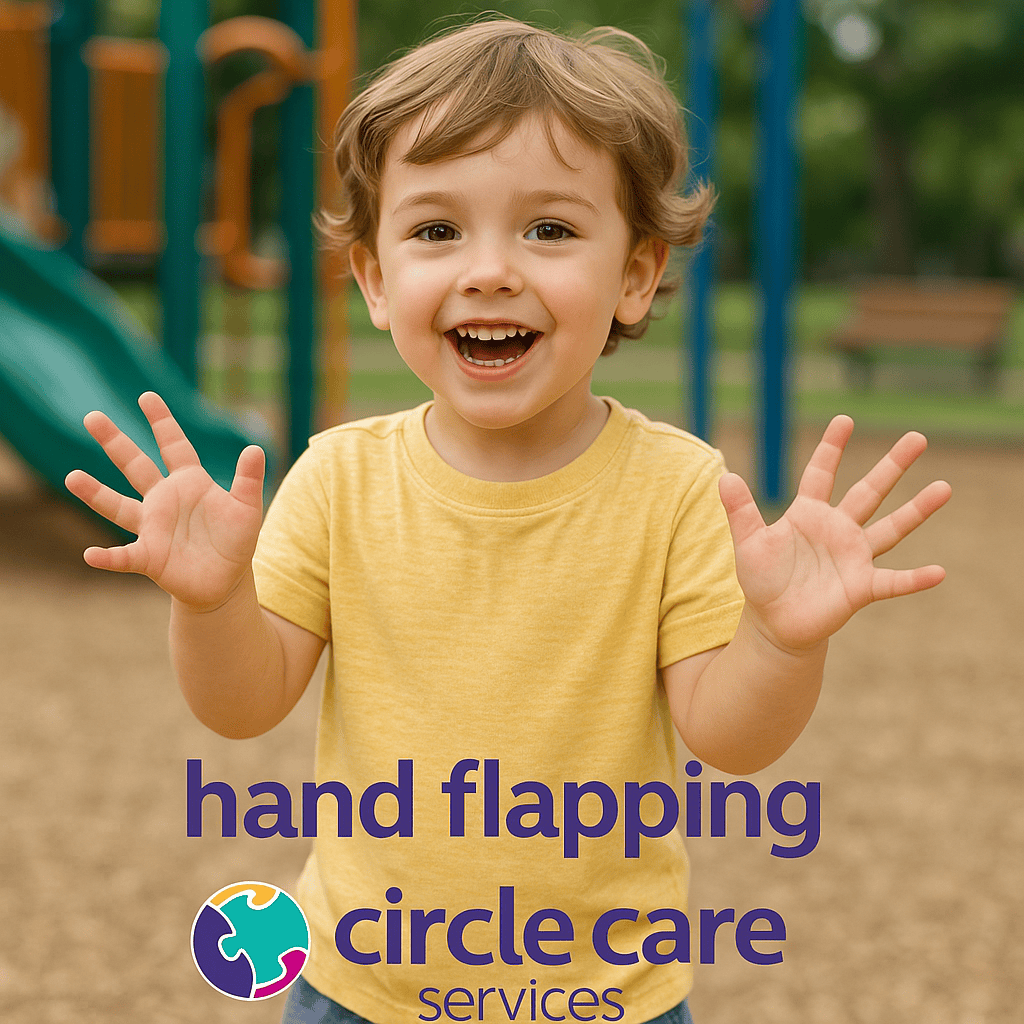
If you were to create a list of the top five or ten characteristics associated with Autism, hand flapping would likely win a spot near the top of the list. Children with Autism who display this behavior are easy to spot in schools and in public because this behavior is frequent, highly visible, and sometimes continuous. While not inherently problematic, this recurring public display can become problematic when it gets in the way of daily functioning and social interactions.
What Is Hand Flapping?

Hand flapping is a form of Autism stimming. It refers to repetitive hand movement that occurs up and down or side-to-side. It can include finger wiggling, clapping, moving arms, shaking, clenching fists, or any other variation of these characteristics. Often, it is part of a full physical display that might include body rocking or head shaking, or even pacing or jumping while making vocalizations.
Is it a sign of Autism? It can be, but hand flapping isn’t always associated primarily with Autism. Flapping hands can accompany other neurological or developmental disorders in addition to Autism. Children who are diagnosed with ADHD, Down Syndrome, OCD, and other neurological disorders can also have a tendency for hand flapping. Typically developing children- and even some adults- occasionally exhibit hand flapping as a display of excitement, nervousness, stress management or just habit without giving it a second thought. Is hand flapping bad? Hand flapping only becomes concerning when it interferes with the ability to function and communicate.
What Causes Hand Flapping?
Hand flapping is categorized as an automatic response to specific triggers in a person’s environment. It is a physical response without deliberate thought- that is why it is called an automatic response.
For those of us who live with or work with a child with Autism, we know that hand flapping in Autism is also a self-stimulatory behavior- otherwise known as “stimming”. A child with Autism uses stimming behaviors to self-regulate their emotions or anxiety. Since children with Autism have difficulty identifying their feelings or expressing them verbally, stimming provides a way to process those feelings.
Typical children and adults do it, too! Nail biting, fidgeting, pacing, or twirling your hair while you talk on the phone are all automatic responses similar to autism flapping. They accomplish the same thing- self-regulation and processing.
What triggers hand flapping will vary from person to person with Autism. Any of the following can be considered triggers:
Excitement
A child sees a butterfly and responds by smiling, squealing, and hand flapping and jumping in excitement.
Fear
A big spider strolls by and the child begins to flap hands and cry.
Accomplishment
A child finishes a drawing, raises their hands, and moves their fingers vigorously while looking over the drawing with a smile.
Thinking
A child stares off into the distance, rocking back and forth with hands up while flicking wrists and occasionally clapping.
Emotional Distress
Following an upsetting event, a child may vocalize loudly, pace, wring their hands, clap, and flap their hands up and down.
Should I Stop Hand Flapping?
A commonly posed question by parents and caregivers of children with Autism is, "Should I stop hand flapping?" The answer to this isn't black and white; rather, it's steeped in shades of grey. Hand flapping, often observed as a form of stimming, serves a crucial function for many children with Autism. It acts as a coping mechanism, a personal tool they use to manage their experiences of overstimulation, anxiety, and stress. In essence, hand flapping is a self-regulated form of stress management.
Given the therapeutic nature of this behavior, outright elimination of hand flapping may not be the most beneficial approach for the child. It's important to remember that every child with Autism is unique, and what works for one may not work for another. It's about understanding their unique experiences and emotions and finding a balance between allowing them to stim for self-regulation and ensuring it doesn't limit their social or practical abilities.
Nevertheless, if the frequency and intensity of hand flapping become overwhelming to the point of interfering with everyday activities or even posing a risk of injury, intervention may indeed be necessary. The goal here isn't to stifle the child's natural response to overstimulation but rather to ensure that it does not adversely affect their daily life. It's about creating a positive environment that fosters both comfort and functionality.
This delicate balancing act can often be achieved through evidence-based strategies such as differential and positive reinforcement, which encourage positive behaviors and gradually reduce the need for excessive stimming.
Video credit chrisjoshua amoguis
How Do You Stop Hand Flapping in Autism?
At its core, stimming is a natural coping mechanism and is common in all children. However, the frequency, intensity, and timing can make it a challenge for children with Autism. If stimming does a lot to quell your child’s anxieties and soothes them, there is no urgent need to step in. The only disadvantage is that the stimming may be seen as distracting or strange to others, but most Autism moms and dads have dealt with that enough in their lives to let it slide.
Stopping an automatic response is a challenging task for any parent or caregiver. There are a few approaches that are proven to help.
Figure out the function of the behavior and change the environment.
For example, if a child with Autism has an aversion to a certain type of food and the hand flapping only happens in the presence of that particular food- simply remove that food item and avoid serving it to the child in the future. This is a great first attempt, but it isn’t always that simple.
Teach the child with Autism a replacement skill.
This should be something that is more appropriate than the stimming hand-flapping behavior. For example, a nonverbal child learns how to use a break card to request a break rather than crying and flapping his/her hands to avoid a task.
Deliver praise and positive reinforcement.
If a child with Autism is behaving appropriately, take a moment and praise him/her with heavy doses of praise! Hug, squeeze, or deliver positive statements such as, “I LOVE the way you are sitting so calmly” or “Wow! Look at how nice and grown up you are sitting… and you are so quiet. Great job!”
Practice sitting calmly in situations that would normally trigger hand flapping.
Slowly increase the amount of time that the child is expected to sit still and give them positive reinforcement for every extra second.
Find help.
All these techniques are part of the regular therapy children receive when they get ABA therapy, which is recommended for children with Autism. Hand flapping and Autism are normal for many children, and Circle Care Services is a great Autism support provider – the perfect place to start if you live in the New Jersey or Massachusetts area. Involving a professional in the care of your child who will guide you and keep you on track will help you achieve long-lasting progress.
Our qualified staff can help you find solutions to your child’s stimming behaviors. If you feel these behaviors are starting to affect your child’s ability to communicate or perform tasks, contact Circle Care today. We offer free consultations, and we’d love to hear from you.

HELP FOR THE HARD PART OF THE DAY.
When the next tantrum hits... do you feel prepared, or do you feel stuck trying to figure out what to do? Get weekly emails from clinicians and parenting experts who know what to do when autism meets real life!

GOT A QUESTION?
You don’t have to be “ready” for anything to get help from our team. If you have a question about your child, ABA, screening, or anything about autism… give us a call anytime.